
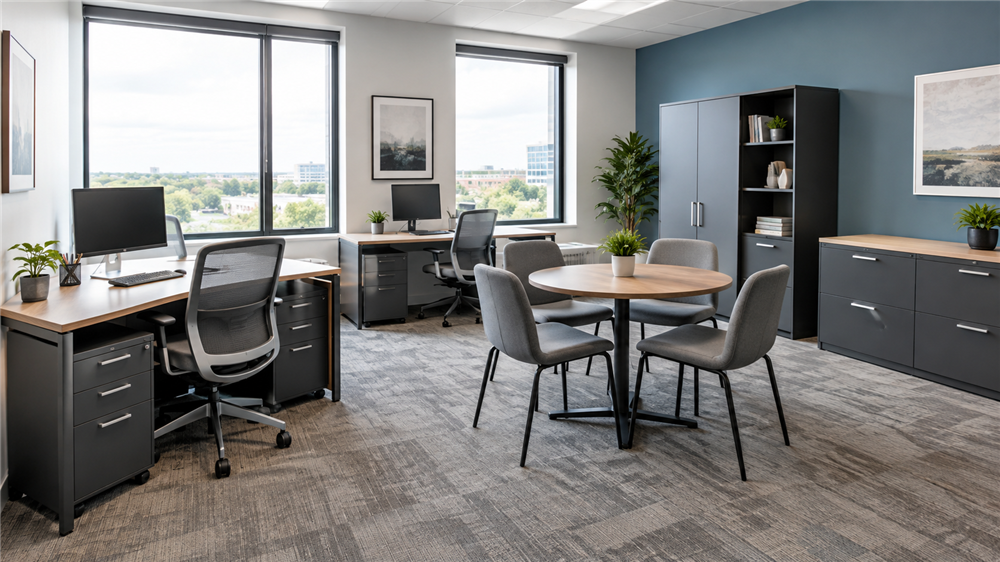
Office Furniture for Startups: How to Furnish a New Office on a Budget
Starting a new business is exciting, but furnishing your first office can quickly become a major expense.
Desks, office chairs, storage, conference furniture, reception furniture, and workstations all add up. At the same time, you want your new office to look professional and provide a comfortable environment for your employees and customers.
The good news is that you don't have to spend a fortune to create a functional, professional office.
With some planning and the right furniture choices, you can furnish your new office while staying within your budget and leaving room for future growth.
Here are some practical tips for furnishing a startup office.
1. Determine Your Office Furniture Budget
Before you start shopping, establish how much you can realistically spend on office furniture.
It can be tempting to purchase everything you want when setting up a new office, but your furniture budget needs to fit within the overall financial needs of your business.
Consider your expected number of employees, the size of your office, the type of work being performed, and which furniture pieces are essential immediately.
Creating a furniture budget also helps you determine where you should spend more and where you may be able to save.
2. Measure Your Office Before Buying Furniture
One of the biggest mistakes a new business can make is purchasing furniture before understanding how it will fit into the office.
Measure the available space and note the locations of doors, windows, electrical outlets, columns, heating and cooling equipment, and other permanent features.
Think about how employees and customers will move through the space.
A desk may fit physically in a particular location, but if it blocks a walkway or makes it difficult to open a filing cabinet, it may not be the right choice.
Planning your layout before purchasing furniture can help prevent expensive mistakes.
3. Start With the Essentials
You don't necessarily have to furnish the entire office on the first day.
Start with the furniture your business needs to operate effectively.
For many startups, that includes:
-
Comfortable office chairs
-
Filing and storage cabinets
-
Workstations or cubicles if needed
-
A small meeting table and chairs
-
Reception furniture if customers visit your office
Once the essential furniture is in place, you can add other pieces as your business grows.
4. Choose Desks Based on How You Work
The right desk depends on the type of work being performed and the amount of space available.
Straight desks can work well in smaller offices and can be positioned against walls to maximize floor space.
L-shaped desks can provide additional workspace and are often useful in corners.
U-shaped desks can provide a large amount of workspace but require more room.
Height-adjustable desks can also be worth considering if employees spend long periods working at a desk and would benefit from being able to alternate between sitting and standing.
The goal is to choose desks based on how your employees actually work rather than simply choosing the largest desks available.
5. Invest in Comfortable Office Chairs
Office chairs are one area where it can make sense to prioritize quality.
Employees may spend many hours sitting at their desks, so a comfortable, adjustable chair can be an important part of a productive workspace.
Look for chairs with appropriate adjustability and support for the people who will be using them.
You don't necessarily need the most expensive chair available. The important thing is finding chairs that provide the features and comfort your employees need.
6. Consider Used Office Furniture
A startup doesn't always need to purchase every piece of furniture new.
Quality used office furniture can be an excellent way to stretch your budget while still creating a professional workspace.
Used desks, office chairs, filing cabinets, conference tables, workstations, and other commercial office furniture can often provide substantial value.
Depending on the condition and availability, buying used can allow a new business to furnish more of its office without spending as much as it would on an entirely new setup.
A combination of new and used furniture can also be a practical approach.
For example, you might purchase new office chairs while using quality used desks and storage cabinets.
7. Choose Furniture That Can Grow With Your Business
Your startup may have five employees today and fifteen employees a few years from now.
When possible, choose furniture that can adapt as your business grows.
Modular workstations can be particularly useful because additional components can sometimes be added or rearranged as the office changes.
It is also worth considering whether desks, storage, and other furniture can be moved or reconfigured later.
Buying furniture that can adapt to future changes may help reduce the need to replace everything when your business expands.
8. Don't Forget Storage
Storage is easy to overlook when you're focused on desks and chairs.
However, offices quickly accumulate paperwork, supplies, equipment, and other materials.
Filing cabinets, storage cabinets, shelving, and other organization solutions can help keep the office clean and professional.
Consider how much storage you actually need before buying. You may also be able to save floor space by using taller storage cabinets instead of wider furniture.
9. Create a Meeting Area
Even a small startup office may need a place for employees to meet or talk with customers.
You don't necessarily need a large conference room.
A smaller conference table with several chairs can provide a practical meeting space without requiring a large amount of floor space.
If your office is particularly small, consider furniture that can serve multiple purposes.
A meeting table could also be used for projects, training, or other group activities.
10. Make a Good First Impression
If customers or clients visit your office, the reception area is often their first impression of your business.
You don't necessarily need a large reception area.
A well-organized reception desk, comfortable guest chairs, and a clean, professional environment can create a welcoming space without taking up excessive room.
Keep the area uncluttered and make sure customers can easily see where they should go when they arrive.
11. Don't Furnish More Office Than You Need
One of the easiest ways to overspend when starting a business is buying furniture for employees or areas you don't currently have.
If your business has a small team, don't feel like you need to furnish an entire office for a future workforce immediately.
Start with what you need today while keeping future growth in mind.
You can always add desks, chairs, storage, and other furniture as your business expands.
12. Consider Furnishing Your Office in Stages
Furnishing an office doesn't have to happen all at once.
If your budget is limited, prioritize the furniture needed to get your business operating.
You might start with employee workstations and office chairs, then add a conference table, additional storage, reception furniture, or other pieces later.
This approach can help preserve cash for other startup expenses while still allowing you to create a professional workspace.
13. Plan for Employee Comfort
A professional office should also be comfortable.
Think about desk height, chair adjustability, monitor placement, lighting, and the amount of room employees have around their workstations.
Good planning can help create a workspace where employees can work comfortably throughout the day.
Furniture should support the way people work rather than simply filling the available space.
14. Get Help With Your Office Furniture Plan
If you're not sure how much furniture you need or how everything will fit, professional office space planning can help.
A furniture professional can help you look at your available space, determine what types of furniture will work, and create a layout that provides good traffic flow and efficient use of the room.
This can be particularly helpful for startups because mistakes made during the initial setup can be expensive to correct later.
Furnishing a New Office Doesn't Have to Break the Budget
Starting a new business comes with plenty of expenses, but furnishing your office doesn't have to be one of the biggest.
Start by determining your budget, measuring your space, and identifying the furniture you actually need.
Consider both new and used office furniture, look for furniture that can adapt as your business grows, and prioritize the pieces that employees will use every day.
With thoughtful planning, even a limited budget can create a comfortable, professional, and functional office.
Office Furniture for Your New Business
Choice Office Furniture helps businesses find practical office furniture solutions for their workspace and budget.
We offer new and used office furniture, including desks, executive desks, L-shaped desks, sit-stand desks, office chairs, conference tables, reception furniture, filing cabinets, cubicles, workstations, and more.
We can also help with office space planning, furniture delivery, installation, workstation reconfiguration, and other office furniture services.
Whether you're opening your first office, expanding your business, or replacing an existing workspace, we're here to help you find furniture that fits your needs.
Contact Choice Office Furniture to discuss your new office project.
Frequently Asked Questions About Startup Office Furniture
How much should a startup spend on office furniture?
The amount a startup should spend depends on the size of the office, number of employees, type of work, and available budget. Start with essential furniture such as desks, office chairs, and storage, then add other furniture as the business grows.
What furniture does a new office need?
Most new offices need desks, office chairs, storage, and some type of meeting area. Businesses that regularly meet with customers may also need reception furniture, guest seating, and additional conference furniture.
Is used office furniture a good choice for startups?
Yes. Quality used office furniture can help startups furnish a professional workspace while keeping costs under control. Used desks, chairs, filing cabinets, conference tables, and workstations can be practical options depending on their condition and the needs of the business.
Should I buy all my office furniture at once?
Not necessarily. Many startups can save money by purchasing essential furniture first and adding additional pieces as the business grows. Furnishing the office in stages can help preserve cash for other business expenses.
What type of desk is best for a startup office?
The best desk depends on the available space and how the employee will use it. Straight desks can work well in smaller offices, while L-shaped desks can provide additional workspace. Larger offices may have room for U-shaped desks or workstation systems.
How can I furnish an office on a limited budget?
Start by determining what furniture you actually need, measure your space before purchasing, and consider both new and used office furniture. Prioritizing essential furniture and adding other pieces as your business grows can also help keep costs under control.
How can I plan my office layout before buying furniture?
Measure the room, identify doors and other fixed features, determine how many people will use the space, and consider traffic flow. Planning the layout before purchasing furniture can help prevent buying pieces that don't fit or don't work well in the space.