
Running a small business often means making the most of the space you have. Whether you are setting up a new office, moving into a smaller location, or simply trying to make your current workspace more efficient, the right office furniture and layout can make a big difference.
A well-planned small office can still be comfortable, professional, and functional. The key is choosing furniture that fits your space while providing the storage, workspace, and flexibility your business needs.
Here are some practical tips for making the most of a small office.
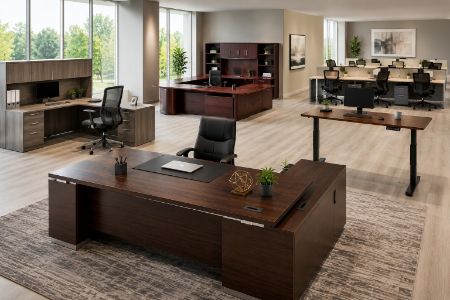
1. Start by Measuring Your Office
Before purchasing furniture, take accurate measurements of your available space.
Measure the overall dimensions of the room and pay attention to doors, windows, columns, electrical outlets, heating and cooling equipment, and other permanent features.
It is also important to think about how people will move through the office. A desk might physically fit into a particular area, but that does not mean it is the best location if it blocks a doorway or creates a narrow walkway.
Planning your layout before purchasing furniture can help prevent costly mistakes.
2. Choose Desks That Fit Your Space
A large desk can provide plenty of workspace, but it can quickly overwhelm a small office.
For smaller workspaces, consider desks that provide the workspace you need without taking up unnecessary floor space.
Straight desks are often a good choice when space is limited because they can be positioned against a wall and work well in a variety of office layouts.
L-shaped desks can also be useful when you need additional workspace, especially when positioned in a corner. However, make sure there is enough room around the desk for comfortable movement.
The goal is not necessarily to buy the smallest desk available. Instead, choose a desk that provides the right amount of workspace for the job.
3. Consider Shared Workstations
If several employees need to work in the same room, individual desks aren't always the most efficient option.
Cubicles and workstation systems can help you create dedicated work areas while making better use of the available floor space.
Workstations can also provide employees with a defined workspace and some privacy without requiring a separate office for every person.
Depending on your business, a combination of individual offices, workstations, and shared areas may be the most efficient solution.
4. Use Vertical Space for Storage
When floor space is limited, look up.
Tall filing cabinets, storage cabinets, shelving, and other vertical storage solutions can provide valuable storage without taking up as much floor space as larger horizontal furniture.
Keeping paperwork, supplies, and other office materials organized can also make a small office feel less crowded.
Before purchasing storage furniture, consider what you actually need to store. Eliminating unnecessary items can be just as valuable as adding more storage.
5. Don't Forget About Office Chairs
The desk may be the largest piece of furniture in a workstation, but employees spend a significant amount of time sitting in their office chairs.
Even in a small office, don't sacrifice comfort simply to save a little space.
Look for office chairs that provide good support and can be adjusted to fit the person using them.
A comfortable, ergonomic chair can make a workstation more functional without requiring additional floor space.
6. Create a Small Meeting Area
A small office may not have room for a large conference room, but that doesn't mean you have to eliminate meeting space.
A compact conference table and appropriately sized chairs can create a useful meeting area without taking over the office.
For very small offices, consider a smaller round or rectangular conference table that can also serve other purposes when meetings aren't taking place.
The important thing is to choose furniture that matches the number of people who actually use the space.
7. Keep Traffic Flow Open
One of the biggest mistakes in a small office is trying to fit too much furniture into the available space.
Employees and customers need to be able to move comfortably through the office.
Leave enough room around desks, doors, filing cabinets, and meeting areas so furniture can be used without creating obstacles.
An office with fewer pieces of furniture that are positioned correctly can often be more functional than an office packed with furniture.
8. Consider Multi-Purpose Furniture
When space is limited, furniture that can serve more than one purpose can be especially useful.
For example, a conference table might also be used as a project table. A storage cabinet might provide both storage and workspace. A reception area might include seating that can also be used for informal meetings.
Think about how each piece of furniture will be used throughout the day before deciding how much furniture your office actually needs.
9. Don't Overlook the Reception Area
Even a small business needs to make a good first impression.
If customers visit your office, create a clean and professional reception area without using more space than necessary.
A compact reception desk, a few comfortable guest chairs, and organized storage may be all you need.
The goal is to create a welcoming entrance while keeping the area open and easy to navigate.
10. Consider Used Office Furniture
For small businesses, the budget is often just as important as the available space.
Used office furniture can be a practical way to furnish an office while keeping costs under control.
Quality used desks, office chairs, filing cabinets, conference tables, and workstations can provide many of the same benefits as new furniture at a lower cost.
Buying used can also make it possible to furnish more of your office without exceeding your budget.
In some cases, a combination of new and used office furniture can provide the best balance between appearance, quality, and cost.
11. Plan Before You Buy
Before purchasing furniture for a small office, ask yourself a few questions:
- How many people will regularly use the office?
- What type of work will they be doing?
- How much desk space does each person actually need?
- How much storage is required?
- Will customers or clients visit the office?
- Do you need a dedicated meeting area?
- Where are the doors, windows, outlets, and other fixed features?
- How will employees move through the space?
- Can any furniture serve multiple purposes?
- Would new, used, or a combination of furniture make the most sense?
Taking the time to answer these questions can help you avoid buying furniture that doesn't work well in your space.
Make the Most of Your Small Office
A small office doesn't have to feel cramped or unprofessional. With the right furniture and a well-planned layout, you can create a workspace that is comfortable, efficient, and attractive.
The key is to start with the space you have and choose furniture based on how your business actually operates.
At Choice Office Furniture, we can help businesses find the right office furniture and plan an efficient workspace. Whether you need desks, office chairs, workstations, storage, conference furniture, or a combination of new and used office furniture, we can help you find solutions that fit your space and budget.
If you're planning a new office or trying to improve your current workspace, contact Choice Office Furniture to discuss your project.
Frequently Asked Questions About Small Business Office Furniture
What furniture is best for a small office?
The best furniture for a small office is furniture that provides the workspace and storage you need without taking up unnecessary floor space. Straight desks, L-shaped desks, compact workstations, vertical storage cabinets, and appropriately sized office chairs can all work well in smaller offices.
How can I make a small office look bigger?
Keep walkways open, avoid overcrowding the room with furniture, and use storage that takes advantage of vertical space. Choosing appropriately sized desks and keeping the workspace organized can also make a small office feel more open and comfortable.
Are L-shaped desks good for small offices?
L-shaped desks can be a good choice for small offices when they are positioned correctly. A corner location can allow an L-shaped desk to provide additional workspace while making efficient use of otherwise unused space. However, you should measure the room carefully to make sure there is still enough room for comfortable movement.
Is used office furniture a good option for a small business?
Yes. Used office furniture can be an excellent option for small businesses that want to control their budget. Quality used desks, chairs, filing cabinets, conference tables, and workstations can provide a professional workspace while potentially costing significantly less than buying everything new.
How much space should I leave between office desks?
The amount of space needed depends on the furniture and how the office will be used. The important thing is to provide comfortable walkways and enough clearance for employees to sit, stand, open drawers, and move through the office without creating obstacles. Measuring the space before purchasing furniture can help you determine the best layout.
Should I buy new or used office furniture for a small business?
There isn't one answer for every business. New furniture can provide specific styles, finishes, and configurations, while used furniture can help stretch your budget. Many small businesses can benefit from combining new and used office furniture based on their needs, budget, and available space.